Every city has an origin story. Hamilton has several – and most of them are more layered, more honest, and more interesting than a single founding date implies. The place now known as Hamilton, or Kirikiriroa in Te Reo Maori (meaning “the long stretching place”), has been shaped by thousands of years of Maori occupation, a river that defined everything from food to transportation to spiritual identity, wars that transferred land ownership, and a community that has spent over 160 years working out who it wants to be.
These are the seven stories that matter most to understanding Hamilton today.
| Story | Period | Key Detail |
|---|---|---|
| Tainui waka arrival | 13th century | Hoturoa commanded the Tainui waka, landing at Kawhia Harbour |
| Kirikiriroa settlement | From 16th century | Ngaati Wairere established pā along the Waikato River |
| Kīngitanga movement | 1858 | Pōtatau Te Wherowhero installed as first Māori King |
| Military settlement | August 1864 | 4th Waikato Militia Regiment landed at Kirikiriroa |
| Naming of Hamilton | 1864 | Named by Colonel Moule after Captain Hamilton, killed at Gate Pā |
| City status | 1945 | Population exceeded 20,000 residents |
| University established | 1964 | University of Waikato opened; now home to 13,000+ students |
Story 1 – The Tainui Waka and the First People of the Waikato
The Waikato region belongs to the Tainui confederation of Maori tribes. According to tradition and the research of Te Ara Encyclopedia of New Zealand, the Tainui people arrived in Aotearoa in the 13th century aboard the Tainui waka (canoe), commanded by Hoturoa. The waka explored both coasts of the central North Island before making its final landfall at Kawhia Harbour on the west coast.
From Kawhia, Tainui people spread north, east, and south, establishing settlements throughout the Waikato basin. Kirikiriroa was one of several Ngaati Wairere settlements along the Waikato River. Other pa (village) sites included Te Rapa and Miropiko. The fertile alluvial soils of the Waikato basin – built up over thousands of years as the river changed course – supported sustained Maori occupation from at least the 16th century.
The river was not simply infrastructure. It was spiritual. Te Ara records that “orators addressed it as having a life-force of its own.” A well-known whakatauaki (proverb) about the Waikato River reads: “Waikato taniwha rau, he piko he taniwha, he piko he taniwha” – “Waikato of a hundred taniwha, on every bend a taniwha” – attributing the mana of the Waikato tribes to the power of the river. In 1859, scientist Ferdinand Hochstetter called it “the Mississippi of the Maoris.” In 1993, the Waitangi Tribunal formally acknowledged the Waikato River as a taonga (treasure) of Tainui and Ngati Tuwharetoa.
The river that defined that history still runs through Hamilton today. The Hamilton City River Ride and Walks follows the same waterway that Tainui ancestors traveled by waka for centuries, and walking it with this history in mind gives the path a depth that no fitness tracker can measure.
Story 2 – The Kingitanga Movement and Potatau Te Wherowhero
In 1858, one of the most significant events in New Zealand political history took place in the Waikato: Potatau Te Wherowhero was installed as the first Maori King, founding the Kingitanga (Maori King movement). He was from the Ngati Mahuta hapu of the Waikato iwi. The movement arose because growing Crown pressure to purchase Maori land was seen as an existential threat to iwi sovereignty. Its purpose was to unite tribes, protect land from further sales, and establish a parallel framework of Maori governance.
Waikato-Tainui has a tribal membership of over 80,000 people, with Hamilton City now its largest population centre. The Kingitanga movement remains active. The movement’s base at Turangawaewae Marae in Ngaruawahia, approximately 20 kilometres north of Hamilton, is one of the most significant Maori sites in New Zealand.
The Waikato Museum on the riverbank in Hamilton holds artefacts, carvings, and taonga that represent this history directly. Waikato Museum is free entry and is the most accessible starting point for understanding the region’s Maori and colonial history in one visit.
Story 3 – The Military Settlement and How Hamilton Got Its Name
The European settlement of Hamilton dates to 1864, following the Invasion of the Waikato (July to December 1863), in which British troops crossed the Mangatwhiri River and drove Maori communities from their land. The New Zealand Settlements Act that followed saw the government confiscate 1,202,172 acres.
On 24 August 1864, the 4th Waikato Militia Regiment landed at Kirikiriroa and established redoubts on both banks of the river. The settlement was named by Colonel William Moule after Captain John Fane Charles Hamilton, commander of HMS Esk, who was killed at the Battle of Gate Pa (Pukehinahina) on 29 April 1864. Captain Hamilton never set foot in Kirikiriroa – the naming followed the British military convention of honouring fallen officers.
The Waikato Museum today holds Captain Hamilton’s sword, medals, and belt, donated by his family.
In 1995, after decades of negotiation, Waikato-Tainui signed a Deed of Settlement with the Crown – the first Treaty of Waitangi settlement in New Zealand’s history – receiving a package totalling approximately $170 million in land and cash. The University of Waikato campus in Hamilton now sits on land leased from Tainui Group Holdings, the tribal economic arm of Waikato-Tainui, in direct acknowledgement of this history.
Story 4 – The Waikato River as Hamilton’s First Highway
Before roads. Before railways. Before the first traffic bridge opened in 1879. The Waikato River was Hamilton’s primary connection to the rest of the country. Paddle steamers brought supplies, mail, and visitors upstream from the coast. Farm produce and coal went out the same way.
The Union Bridge of 1879 was a turning point – Hamilton’s first traffic bridge connecting east and west. What followed was a sequence of crossings that stitched the two-sided city together: Claudelands Bridge (1884), Victoria Bridge (1910), Fairfield Bridge (1937, famous for its curved concrete pillars), and Cobham Drive bridge in 1963. By the time Hamilton received City status in 1945, it was a city defined as much by its bridges as by its river.
The river walk network that lines the Waikato’s banks today reflects that same connectivity – both banks, both directions, accessible to walkers and cyclists. For those who want to explore the city’s geography on foot or two wheels, the Hamilton Lake Walkway and Hamilton City River Ride and Walks together create a circuit that covers more than 10 kilometres of Hamilton’s most historically significant geography.
Story 5 – Becoming a City: Hamilton’s Growth to 1945
Borough records from 1906 show Hamilton’s population was 2,100, with a further 800 living in the nearby settlements of Claudelands and Frankton. By 1917, Hamilton had amalgamated with Frankton, strengthening its economic and industrial base. The period around World War I was a boom time, with Hamilton’s position as an important transport hub driving rapid expansion.
The 1945 Census revealed Hamilton’s population had reached 22,000 – the threshold required for City status, which Hamilton formally received that year. Through the 1950s and 1960s, population continued to grow through the arrival of tertiary-educated residents needed at Waikato Hospital, branches of government, and – critically – a new university.
Story 6 – The University That Transformed Everything
The event that most fundamentally changed Hamilton’s character came in 1964: the opening of the University of Waikato. It was the result of years of determined lobbying by Hamilton residents who argued the city deserved a university of its own.
The university opened with just over 100 students. By the 1980s it was the fastest-growing university in New Zealand. Today it has more than 13,000 students and 1,500 staff, operates campuses in Hamilton and Tauranga, and its Waikato Management School is accredited by AACSB, AMBA, and EQUIS – placing it in the top 1% of business schools globally.
The university’s relationship with Waikato-Tainui is embedded in its physical existence. The Hamilton campus sits on land leased from Tainui Group Holdings. Since 2009, Kingitanga Day is observed annually at the university to honour the connection between the institution and the Kingitanga movement.
Story 7 – Hamilton Gardens: From Rubbish Dump to World-Class Attraction
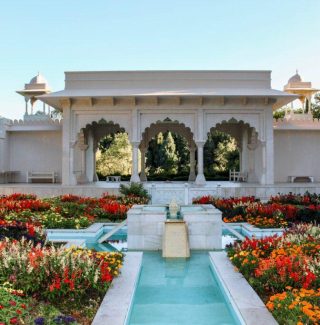
The land that is now Hamilton Gardens was the city’s rubbish dump until visionary planning in the 1960s began the transformation. The gardens developed progressively from the 1980s and are now a 50-hectare site comprising 18 internationally recognised Enclosed Gardens and extensive outer parkland. They attract more than one million visitors per year and are consistently ranked among the top three things to do in New Zealand on TripAdvisor.
In 2014, Hamilton Gardens won the Garden of the Year award at the International Garden Tourism Awards in Metz, France – an award previously won by Singapore Botanic Gardens and the Gardens of Trauttmansdorff Castle in Merano, Italy.
Note for visitors: from 18 September 2024, the 18 Enclosed Gardens require a paid entry fee of $20 per adult for visitors from outside Hamilton. Hamilton residents and ratepayers enter free with a MyGardens Pass. Children under 16 are always free. The Outer Gardens, cafe, playground, Turtle Lake, and parking remain free for everyone.
For a practical visit guide to Hamilton Gardens, including current entry information and what’s on, the Hamilton Gardens website at hamiltongardens.co.nz is the authoritative source.
Discover Hamilton’s Living History
Hamilton’s history is not confined to museums and memorial plaques. It lives in the river path that Tainui ancestors used as a waka highway, in the haka performed before Chiefs games at FMG Stadium, in the bilingual signage appearing across the city, and in the faces of a community where more than 80 ethnic groups now call home.
Whether you’re visiting for the weekend or relocating permanently, understanding Kirikiriroa’s story makes every part of the city more meaningful. Explore hamiltonnz.co.nz for a complete guide to what Hamilton offers today – built on the foundation of the history above.
FAQs About Hamilton NZ History and Culture
What is Hamilton’s Maori name and what does it mean?
Hamilton’s Maori name is Kirikiriroa, meaning “the long stretching place.” The city was named Hamilton in 1864 by Colonel William Moule after Captain John Fane Charles Hamilton, commander of HMS Esk, who died at the Battle of Gate Pa (Pukehinahina), 29 April 1864.
Who were the original inhabitants of the Hamilton area?
Ngaati Wairere, a hapu of the Tainui confederation, were the primary Maori inhabitants of Kirikiriroa. The Tainui people’s ancestors arrived in Aotearoa in the 13th century aboard the Tainui waka. The Waikato region has been occupied since at least the 16th century.
When did Hamilton receive city status?
Hamilton officially became a city in 1945, when the 1945 Census revealed its population had exceeded 20,000 – the legal threshold for City status at that time.
What was the Treaty of Waitangi settlement with Waikato-Tainui?
In 1995, Waikato-Tainui signed a Deed of Settlement with the Crown – the first Treaty of Waitangi settlement in NZ history. The settlement package totalled approximately $170 million in land and cash, in recognition of land confiscations following the Waikato Land Wars of the 1860s.
When was the University of Waikato established?
The University of Waikato opened in 1964, starting with just over 100 students. It now has more than 13,000 students annually across campuses in Hamilton and Tauranga.
Is Hamilton Gardens really free entry?
The Outer Gardens, playground, Turtle Lake, cafe, and parking are free for everyone. The 18 Enclosed Gardens require a paid entry of $20 per adult for non-Hamiltonians (from 18 September 2024). Hamilton residents/ratepayers enter free with a MyGardens Pass. Children under 16 are always free.