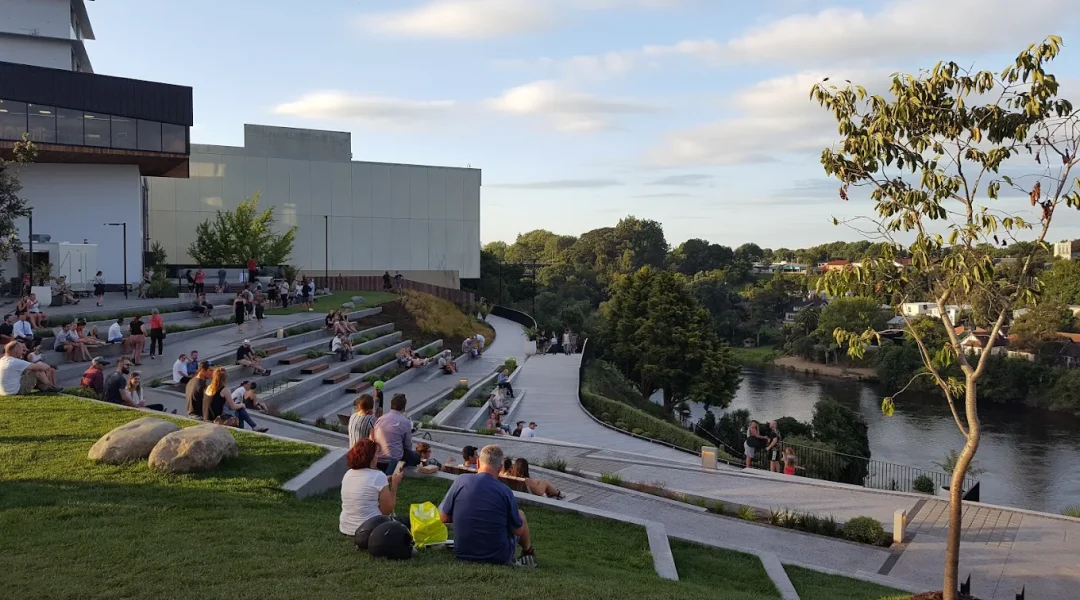
Victoria Street is Hamilton’s historic main street, running beside the Waikato River through the central city. Its story reaches back well before the street itself: Kirikiriroa was a significant Maaori settlement area, the river was the main transport corridor, and the commercial centre later shifted from the wharf at Grantham Street onto higher ground along Victoria Street. Today the street connects heritage buildings, public spaces, hospitality, arts venues and routes down to the river.
This is a history and orientation guide rather than a business directory. Tenants, opening hours, construction projects and parking rules can change, so use the linked official pages before travelling. Historical and visitor information was checked against Hamilton City Council, Manatū Taonga, Te Ara, Heritage New Zealand Pouhere Taonga and local venue sources on 8 October 2026.
Victoria Street Hamilton at a glance
| Detail | What to know |
|---|---|
| Where is it? | Victoria Street runs north to south beside the western bank of the Waikato River. This guide focuses on the central-city section. |
| Why is it important? | It became Hamilton’s principal commercial street and retains a concentration of heritage places and long-established civic and hospitality sites. |
| Best way to explore | Walk the central section in daylight, look above the shopfronts, and include a river connection such as Victoria on the River. |
| Allow | About 60 to 90 minutes for an unhurried heritage walk, longer if you visit a gallery, museum, theatre, café or restaurant. |
| Good starting points | Waikato Museum at the southern end, Embassy Park and the theatre precinct, Garden Place, or Victoria on the River. |
| Check before leaving | Current opening hours, events, road works, river-path conditions, public transport and parking rules. |
Victoria Street is not one single attraction. It works best as a route through several layers of Hamilton: Kirikiriroa and the river, the colonial town and its commercial growth, the heritage streetscape, the later retail centre, and the present mix of culture, public space and hospitality. Looking for those layers makes the walk more meaningful than simply following a list of businesses.
Before Victoria Street: Kirikiriroa and the Waikato River
The history of this part of Hamilton did not begin with European streets or riverboats. Hamilton City Council records about 700 to 800 years of Maaori occupation and settlement in Kirikiriroa. The Waikato River supported food gathering, cultivation, movement and connections between communities. Kirikiriroa Paa, associated with Ngaati Wairere, was a major settlement on the western side of the river.
That context matters because Victoria Street sits close to the river corridor that shaped life here long before the modern central city. A history that begins with a wharf or a hotel leaves out the deeper relationship between tangata whenua and the awa. Hamilton City Council identifies Ngaati Maahanga, Ngaati Tamainupo, Ngaati Wairere, Ngaati Korokii Kahukura and Ngaati Hauaa as mana whenua of Hamilton Kirikiriroa.
The colonial town emerged after the Crown invasion of Waikato in 1863 and 1864 and the confiscation of Waikato land. Te Ara records that Hamilton was established by the 4th Waikato Militia in 1864 near the former Kirikiriroa settlement. For a fuller account of the invasion and raupatu, read the official Waikato-Tainui claim history from Manatū Taonga. This background should not be reduced to a decorative preface: it changed who controlled the land and how the town was laid out.
Hamilton initially developed as settlements on opposite banks of the river. A punt connected Hamilton West and Hamilton East before bridges provided a permanent crossing. The river remained central to transport and trade, and its influence can still be read in the position of Victoria Street, Ferrybank and the routes that descend from the street to the water.

How the commercial centre moved onto Victoria Street
Hamilton City Council’s Victoria Street Historic Heritage Area statement explains that the early business area sat closer to the wharf on Grantham Street. That made sense while the river was the main route for people and goods. Ferrybank had moorings for river steamers, and freight wharves operated upstream of Victoria Bridge. This is the factual basis behind the page’s old paddlewheel theme, but the shift was gradual rather than a simple overnight change from boats to boutiques.
As road connections improved, reliance on river transport decreased. Shops, hotels, banks, workshops and civic functions moved onto the higher river terrace along Victoria Street. The original Hamilton Hotel was established in 1865, and more development followed. By the late 1870s, Victoria Street had become central to the town’s commercial and public life.
The opening of bridges and the arrival of rail also changed movement through Hamilton. The first permanent bridge linking the two sides of the river opened in 1879 and was replaced by the present Victoria Bridge in 1910. Te Ara notes that trains once crossed Victoria Street at road level; a railway subway built in the early 1960s removed that crossing. Each transport change altered how people entered, crossed and used the central city.
Calling Victoria Street Hamilton’s “golden mile” captures its later status, but it can hide the longer sequence. The river came first. Then the wharf-side commercial area developed. Victoria Street became the main street as land transport and the colonial town expanded. Retail patterns changed again with malls, suburban centres and online shopping. The street’s role has continued to evolve rather than follow a single rise-and-fall story.
A short Victoria Street history timeline
| Period | What changed |
|---|---|
| Before 1864 | Kirikiriroa and other paa and maara formed part of a long-established Maaori landscape connected by the Waikato River. |
| 1863 to 1864 | The Crown invaded Waikato. Colonial military settlement at Kirikiriroa followed in 1864 on confiscated land. |
| 1860s to 1870s | Trade initially focused near Grantham Street and the wharf, then shifted toward Victoria Street as roads and the town developed. |
| 1879 | The first permanent bridge connected Hamilton East and Hamilton West, strengthening cross-river movement. |
| 1874 to 1899 | Several major fires damaged the Victoria Street area. Later rules requiring brick or stone influenced the surviving streetscape. |
| 1910 | The present Victoria Bridge replaced the earlier river crossing. |
| 1930s to 1960s | Garden Place was reshaped and the railway crossing was later placed below street level, changing the centre’s form and traffic. |
| Late 20th century | Retail competition and changing travel patterns altered the traditional high-street role. |
| 21st century | River connections, public spaces, heritage, hospitality, arts and new development have become increasingly important to the street’s identity. |
The dates above are landmarks, not a complete history. For a visual comparison, Te Ara’s Victoria Street then-and-now photographs show the same location in 1939 and 2010. Hamilton City Council’s detailed Victoria Street Historic Heritage Area statement provides the deeper planning and heritage record.
Why so many brick and plaster façades survive
Between 1874 and 1899, major fires repeatedly damaged the commercial area. Hamilton City Council’s heritage assessment says the borough responded with rules requiring brick or stone construction on Victoria Street. That helps explain the material character still visible in parts of the southern central-city section.
When walking, look above modern signs and verandas. Ground-floor tenants may change, while upper façades continue to show parapets, window rhythms, masonry details and narrow historic lot widths. The Council identifies the combination of buildings at the footpath edge, mostly two storeys or higher, and a sequence of narrow shop fronts as important to the heritage area’s identity.
The former Hamilton Hotel at 170 to 186 Victoria Street is listed by Heritage New Zealand Pouhere Taonga as a Category 2 historic place. It is one landmark within a broader streetscape, not the only building worth noticing. The value of the area comes partly from the relationship between multiple façades, intersecting streets and the river setting.
A heritage listing does not mean a building is frozen in one period or that every visible element is original. Buildings can be adapted, extended and occupied for new uses. Read the official record when you need a precise construction date, architect or heritage status; do not infer those details from appearance alone.

What to notice on a walk today
A useful Victoria Street walk is less about ticking off every building and more about noticing how the city meets the river. Begin at the southern end near Waikato Museum, ArtsPost and the theatre precinct, or reverse the route from Garden Place. Either direction works. The street is long, so this guide concentrates on Hamilton Central rather than attempting to cover every northern block.
- Start with the river story. From the southern central city, recognise that the street follows a river terrace above the Waikato. The nearby museum provides more context about tangata whenua, regional history and art.
- Pause around the former Hamilton Hotel and theatre precinct. This is where layers of hospitality, fire history, performance and redevelopment meet.
- Look into Embassy Park. The Riff Raff statue and the site’s connection with Richard O’Brien add a 20th-century cultural thread distinct from the older commercial story.
- Read the upper façades. Between Hood Street, Collingwood Street and the central blocks, look past shop signs to see the older proportions and materials.
- Use Victoria on the River as the descent point. It reconnects the main street with the river path and gives a clear view of the river corridor.
- Finish around Garden Place and Centre Place. This shows how the central city’s retail and civic focus continued to change through the 20th century.
Allow the route to change with construction, events and weather. Do not enter private premises only to inspect a building. View façades from public footpaths, use marked crossings, and follow temporary signs. If a venue interests you, check its official opening information rather than assuming it is open because the building can be seen from the street.
Plan a central Hamilton walk
Use the Hamilton NZ maps guide to connect Victoria Street with Garden Place, the river, transport and nearby attractions.
Open the Hamilton maps guide ↗Victoria on the River reconnects the street and awa
One of the clearest ways to understand Victoria Street is to leave it briefly. Victoria on the River creates a public connection from the street to the river path below. Hamilton City Council says the amphitheatre-style park formally reopened in January 2018 and contains more than 9,000 plants.
The space matters because buildings and topography often make the river feel hidden from the main street, even though it is close. Descending through the park reveals the relationship immediately. You can see the river, connect with the riverside path and understand why city planning continues to focus on better links between the centre and the awa.
Victoria on the River has no on-site visitor parking. Its upper area is also shared with local businesses, so follow access signs and keep designated vehicle spaces clear. Read our detailed Victoria on the River visitor guide and verify current conditions with the Hamilton City Council venue page.

Culture at the southern end of Victoria Street
The southern end makes a strong starting point because several cultural places sit close together. Te Whare Taonga o Waikato Museum and Gallery explores regional art, history, science and tangata whenua stories. Next door, ArtsPost occupies a heritage building and presents changing exhibitions and work by artists and makers. Check current exhibitions and hours through the venue before visiting.
Further along the precinct, Embassy Park preserves a link with Richard O’Brien and The Rocky Horror Show through the Riff Raff statue. Hamilton City Council records that O’Brien worked in a barber shop near the former Embassy Theatre and attended late-night film screenings there in the early 1960s. That is a documented local connection, not a generic claim that every nearby business shares the same history.
The BNZ Theatre adds a contemporary performance venue to the south end. Council describes its 1,300-seat auditorium and flexible staging, while the theatre’s own programme should be used for current events and ticket details. Together, the museum, gallery, park and theatre make this part of Victoria Street useful for an arts-focused visit rather than only a heritage walk.
Continue with our separate guides to Waikato Museum and ArtsPost Galleries and Shop. Those pages cover the visitor details; this article explains how the places fit into Victoria Street’s wider story.
Retail, food and nightlife without repeating the directories
Victoria Street’s commercial role has never stayed fixed. It has accommodated hotels, banks, workshops, retailers, offices, cafés, restaurants, bars, entertainment and public uses at different times. The traditional high street has changed as shoppers gained suburban centres, enclosed malls and online options. Hospitality and experiences now play a more visible role in parts of the central street.
That does not mean every older shop became a bar or every surviving building has a romantic reuse story. Tenancies change and some premises stand empty during transitions. A reliable guide should avoid attaching an invented former use to a current business unless a heritage record supports it. This article therefore does not repeat the previous fictional blacksmith, family boutique or unnamed art-gallery claims.
For current choices, use the site’s dedicated Hamilton food and dining guide and bars and nightlife guide. Centre Place has its own visitor guide. Separating those live planning pages from this history article reduces duplication and makes each page easier to maintain.
How to get there and plan your visit
Victoria Street is within Hamilton Central and can be reached on foot from the Transport Centre, Garden Place and nearby central-city destinations. The street itself is long, so choose a starting point based on what you want to see. For heritage and culture, begin near Waikato Museum and walk north. For a shorter river-and-city loop, begin around Garden Place, continue to Victoria on the River, and return through the central blocks.
- By bus: use our Hamilton bus and Transport Centre guide, then confirm the live route and timetable with BUSIT.
- By car: Hamilton City Council currently publishes central-city on-street and all-day parking information. Rates, time limits and payment conditions can change.
- On foot: use marked crossings and allow extra time around events, construction and busy hospitality areas.
- By bike or scooter: follow current transport rules, park clear of pedestrian routes and do not ride through crowded footpaths where prohibited.
- With mobility needs: check each venue’s accessible entrance and parking details directly. Heritage buildings and river connections can have different access arrangements.
Hamilton City Council’s parking charges page is the source for current public parking rates. Use the official map or the Hamilton NZ maps guide to identify a suitable parking area before arriving. Avoid building a plan around one exact street space because closures, events and demand can change availability.
A practical 90-minute Victoria Street route
This sample route is intentionally flexible. It does not depend on a particular shop being open and can be shortened at any point. Check the weather and current access conditions first.
- Waikato Museum and ArtsPost, 15 to 25 minutes. Begin with the exterior and, if open, choose one current exhibition rather than trying to cover everything.
- Embassy Park and theatre precinct, 10 minutes. Notice the relationship between the former Hamilton Hotel, public space, Riff Raff statue and present-day performance venue.
- Heritage façades, 15 to 20 minutes. Walk north between Hood Street and Collingwood Street. Look above the verandas and compare building widths and materials.
- Victoria on the River, 20 minutes. Descend to the viewing and seating areas. If the river path is open and conditions suit, walk a short section before returning.
- Garden Place and central retail area, 15 minutes. Finish by observing how the civic space, mall and street network changed the older linear high-street pattern.
Add time for food, a full museum visit, shopping or a performance. At night, focus on the venue you are attending and your transport home rather than trying to complete a heritage walk in low light. During heavy rain or after a slip notice, verify river-path access before descending.
Is Victoria Street worth visiting?
Yes, if you want to understand how Hamilton Central developed or combine several nearby attractions without driving between them. Victoria Street is most rewarding when treated as a connected route rather than a single sightseeing stop. The street gives access to heritage, the river, public art, galleries, performance venues, food and central-city services.
It may be less suitable if you expect a preserved historic precinct with every building interpreted, or a compact pedestrian mall free from traffic. Victoria Street remains a working city street. Its interest comes from the coexistence of old and new, including the gaps and changes that reveal how commercial centres evolve.
For a first-time visitor, pair Victoria Street with one anchor experience: Waikato Museum for history and culture, Victoria on the River for the city-and-awa connection, an event at the theatre, or a planned meal. That gives the walk a purpose while leaving room to notice the street itself.
Frequently asked questions about Victoria Street Hamilton
Where is Victoria Street in Hamilton?
Victoria Street runs north to south on the western side of the Waikato River. The central-city section passes Garden Place, Victoria on the River, the Hood Street hospitality area and the cultural precinct near Waikato Museum.
What is Victoria Street Hamilton known for?
It is known as Hamilton’s historic main street and for its mix of heritage buildings, central-city retail, hospitality, public spaces, arts venues and links to the Waikato River.
Why did Hamilton’s commercial centre move to Victoria Street?
The early business area was close to the wharf at Grantham Street. As road connections improved and dependence on river transport declined, commerce shifted onto the higher terrace along Victoria Street.
Are there heritage buildings on Victoria Street?
Yes. The street contains locally and nationally recognised heritage places, including the former Hamilton Hotel. Check Hamilton City Council and Heritage New Zealand records for the status and history of a specific building.
Can you walk from Victoria Street to the Waikato River?
Victoria on the River provides a public connection between Victoria Street and the river path. Check Council notices for current river-path access or temporary closures before relying on a particular route.
How long should a Victoria Street walk take?
Allow about 60 to 90 minutes for a central-city walk. Add more time for Waikato Museum, ArtsPost, shopping, food, a theatre event or a longer section of the river path.
Where can I park near Victoria Street?
Hamilton City Council manages on-street and all-day parking around the central city. Rates, time limits and availability can change, so use the Council’s live parking pages and follow signs where you park.
Is Victoria Street suitable for an evening visit?
Victoria Street has restaurants, bars and event venues, but opening times and programmes change. Plan a specific venue, confirm transport home and save the heritage walk for daylight if you want to inspect building details.
Sources and further reading
- Hamilton City Council: Victoria Street Historic Heritage Area statement
- Hamilton City Council: Maaori and mana whenua in Hamilton Kirikiriroa
- Te Ara: Hamilton
- Te Ara: Hamilton west of the river
- Te Ara: Victoria Street then and now
- Heritage New Zealand Pouhere Taonga: Hamilton Hotel (Former)
- Hamilton City Council: Central city development
- Hamilton City Council: Victoria on the River