Hamilton Farmers’ Market is a Sunday food and produce market in Hamilton, New Zealand. Its usual venue is The Barn at Claudelands Events Centre, reached through Gate 3 on Brooklyn Road, and its advertised hours are 8am to midday. Some Sundays use a different venue, so check the organiser’s latest notice before setting off.
If you are searching for the Hamilton Sunday market, this is the one focused on growers, food producers and breakfast shopping. It is different from a Friday night food market or a general second-hand market. This guide helps you choose the right place, carry your shopping comfortably and leave room for a useful conversation with the people behind it.
Practical information was checked on 6 November 2026. Our suggested shopping approaches below are planning ideas, not a promise about a particular stall’s attendance, produce supply, prices or the weather. Start with the date and venue, then decide whether your visit is mainly for groceries, breakfast or a relaxed look around.
Hamilton Farmers’ Market: hours, location and essentials
| Detail | What to know |
|---|---|
| Regular day and hours | Sunday, 8am to midday. Check any date-specific announcements. |
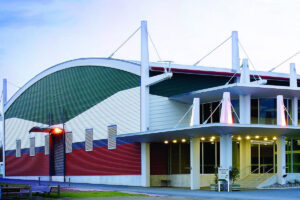
| Usual venue | The Barn, Claudelands Events Centre, Gate 3, Brooklyn Road, Hamilton. |
| Venue change | 29 November 2026: Innes Common by Hamilton Lake; entry via Lake Crescent and Lake Domain Drive. |
| Entry | The organiser advertises free entry. Food and purchases are paid for separately. |
| Usual parking | The organiser advertises free parking at the normal Claudelands market. Follow arrangements for your actual venue. |
| Facilities at the usual venue | The organiser lists indoor and outdoor market space, an Eftpos service and toilets. |
| Operator | Waikato Farmers’ Markets, which also operates the Saturday Cambridge market. |
The organiser’s Hamilton market location page is the useful starting point for the usual Sunday arrangement. Read it together with current announcements, rather than relying on a saved map pin or an older newsletter. A correct weekly timetable does not guarantee the same entrance or site on every date.
Where is the market this Sunday?
Treat the location as the first decision in your trip. The normal address is in Claudelands, while the announced 29 November market is beside Hamilton Lake. They are different parts of the city. Setting your navigation to The Barn when the event is at Innes Common can put the rest of your morning out of order, particularly if you are meeting someone or travelling by bus.
The Innes Common notice gives two entry approaches: Lake Crescent and Lake Domain Drive. Hamilton City Council’s Innes Common page identifies the reserve beside Hamilton Lake and lists parking, toilets, a playground, picnic facilities and walkways. Those park facilities do not establish the layout, available parking spaces or accessible entrance of a particular market day; use the organiser’s arrangements for the event itself.
Before leaving, confirm three things: the full date, the venue name and the entrance you intend to use. Send those details to anyone joining you. For a relocated market, plan your journey again rather than simply changing the last turn of a route you use for Claudelands. If an announcement is unclear, ask the organiser before travelling instead of assuming that the regular address still applies.
What can you buy at Hamilton Farmers’ Market?
The organiser’s stallholder directory separates the market into food and plant categories. Use it to browse producers before visiting, but remember that a directory is not a live attendance list. A stall can be seasonal, listed for Cambridge rather than Hamilton, or absent on the Sunday you choose. If a particular purchase is the reason for your trip, confirm that producer’s next Hamilton date first.
| Shopping interest | A useful way to approach it |
|---|---|
| Fruit and vegetables | Look at the range before choosing quantities. Ask what is in season, where it was grown and what will keep until your next shop. |
| Bread and baking | Choose what you will eat fresh and what you intend to freeze. Ask the seller about ingredients and storage. |
| Meat, fish and dairy | Plan how you will keep purchases chilled and how soon you can get them home. |
| Prepared food and coffee | Decide whether to eat before shopping or after browsing; check the options available that morning. |
| Plants, flowers and pantry items | Think about what you can carry home alongside groceries, particularly if using public transport. |
The most useful purchase is not necessarily the largest bag. Consider how many meals you are buying for, how much fridge space you have and whether you are heading home afterwards. A market visit can be a small top-up for one person as easily as a larger household shop. There is no requirement to turn a first visit into a full weekly grocery run.
Local producers: examples to look up before you go
The official vegetable-producer listings include Greenfern Asparagus, Pirongia Mountain Vegetables and Suncakes Gardens. The directory describes Greenfern as being near Cambridge and Suncakes Gardens as growing at Whatawhata. These are examples of the local connections worth exploring: ask what is available now and how the grower suggests using it, rather than expecting the same vegetables throughout the year.
For prepared food, the ready-to-eat directory lists businesses including Cornish Pasties, Hong Dumplings and Mavis & Co. It also contains traders associated with Cambridge, which is why reading the individual entry matters. A producer appearing on the Waikato directory does not automatically mean that producer attends both markets every week.
The meat-stall directory includes Soggy Bottom Holdings, described by the organiser as an original market stallholder offering meat and smallgoods. If you want a particular cut or product, check availability with the business rather than relying on an old photograph of its stall. The same approach is useful for special dietary requests, larger quantities or something you hope to collect on a specific Sunday.
Good questions are practical ones: “How should I store this?”, “What would you use it for?”, “Is this item available next week?” and “Do I need to order ahead?” They help you make a decision without assuming that every item is locally grown, organic, made that morning or suitable for every diet. Check the description of the actual product you are buying.
How to plan a useful first visit
For a first visit, keep the shopping list short. Pick two or three things you actually need, then leave space to browse. This gives you a reason to ask questions without feeling that you must compare every stall. If you are shopping with someone else, agree whether the priority is groceries, breakfast or meeting friends; different expectations can turn a simple outing into several competing errands.
Arrive early enough to make your choices before the advertised midday finish. Earlier arrival may give you more browsing time, but it does not guarantee every product or a quiet carpark. Later arrival can suit a short look around if you accept that a particular item may have sold out. Avoid relying on a late discount: pricing and stock decisions belong to each seller.
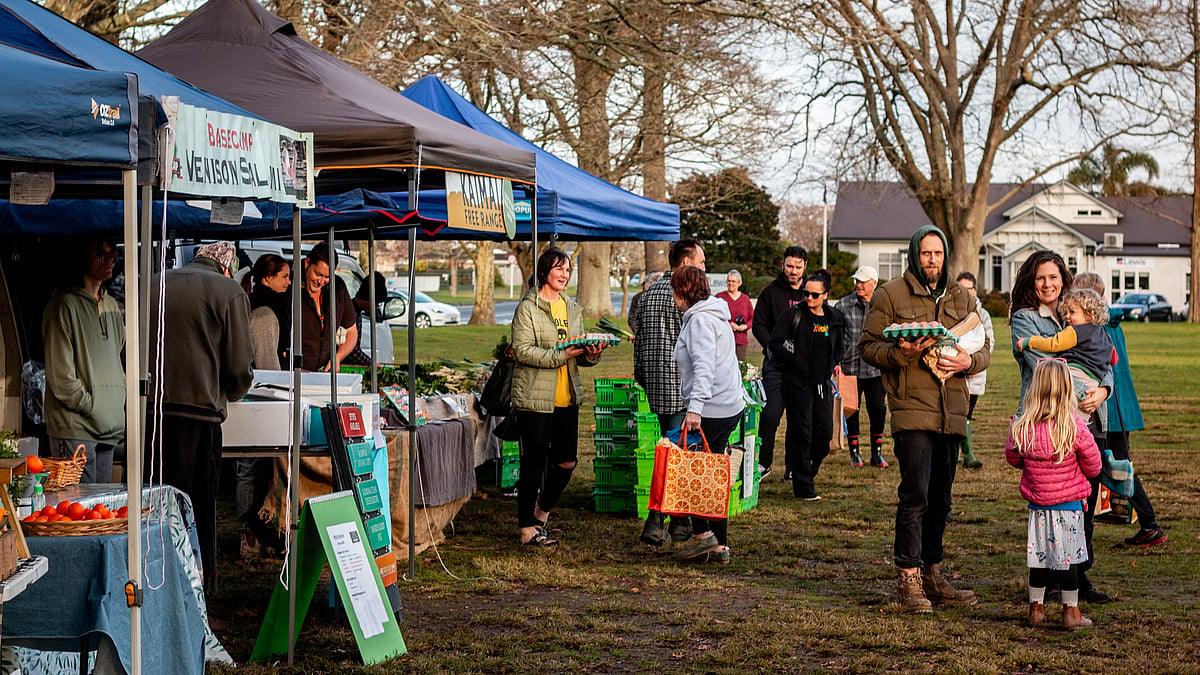
Take a clean, reusable bag that is comfortable to carry when full. A second small bag helps separate fragile baking or flowers from heavier produce. If you are buying chilled food, bring a suitable chilly bag and plan the rest of the morning around getting it home. Wear shoes suitable for the conditions at the actual venue, especially if an announced relocation uses outdoor grounds.
A simple order is to browse once, ask any questions, then buy what you can use. It reduces repeated carrying and helps you notice how much you are spending. Keep receipts or product details where useful, particularly if you want to contact a producer later. The aim is to leave with something you want, not with an overflowing bag because the market made every purchase seem urgent.
Payment, facilities and getting around the site
The organiser’s Hamilton market information lists an Eftpos service, toilets and a large free carpark at the usual Claudelands venue. This is useful visitor information, but it does not mean that every stall takes every card or that contactless payment is universal. Ask before ordering if a specific payment method matters to you, and avoid spending your entire budget before confirming how you will pay for the final purchase.
For families, a pushchair or mobility aid can affect which entrance and surfaces are practical. Ask the organiser about step-free access, accessible toilets and the distance from the available parking on the date you plan to visit. General venue facilities and event-day accessibility are related questions, but they are not interchangeable. We have not treated an indoor venue or a public park listing as proof that every part of a temporary market layout is accessible.
If you want to bring a dog, confirm the market’s current policy with the organiser. A nearby park’s dog-exercise designation does not establish permission to take a pet through food stalls. This also applies when the venue changes: use the rules for the market and its event footprint, rather than assuming the policy follows automatically from the surrounding reserve.
Driving, walking or taking a bus to the market
For a regular Claudelands Sunday, navigate to the organiser’s Gate 3 entrance on Brooklyn Road. Follow current signs and keep pedestrian approaches clear when unloading or meeting someone. Free parking is an advertised feature of the normal market; a different event at the wider Claudelands site or a relocated Sunday may have different access arrangements. We cannot guarantee a parking space at a particular arrival time.
If you are using public transport, first choose the correct market venue, then plan both the outward and return journey. Our Hamilton bus guide explains the local network and links to operator information. Use BUSIT’s current journey information to check Sunday services, your stop and the walk from that stop to the entrance. A weekday route or timetable should not be assumed to apply on Sunday.
Walking can be a good fit for a small shop if the route and distance suit you. Think about the return journey with your purchases, not only the walk there. If you are arriving from accommodation elsewhere in Hamilton NZ, check the actual route before deciding that “near the centre” means a short or straightforward walk. For a larger shop, arrange a realistic way to get the bags home.
Breakfast, families and a manageable budget
A food market can be an outing without becoming an expensive one. Decide what you want to spend on groceries separately from food or drinks you will consume there. If you are taking children, choose whether they are helping pick one item, sharing breakfast or simply joining a short visit. That small decision makes it easier to leave before shopping bags and patience both run out.
Ask sellers directly about ingredients and preparation if someone in your group has an allergy or other dietary requirement. A general description such as vegetarian, handmade or local does not answer an allergen question. Check the particular item and explain the requirement clearly. If a seller cannot confirm what you need to know, choose another option rather than making assumptions from the appearance of the food.
For a catch-up with friends, send the correct venue and agree on an arrival window. It is easier to choose what to eat once everyone has seen what is available. If the group wants a longer sit-down meal or a specific booking, use our Hamilton food and dining guide to plan that separately. A market stall and a booked café visit solve different needs.
Taking food home before extending your day
Buying food changes what is sensible to do afterwards. New Zealand Food Safety recommends taking chilled and frozen purchases home promptly, separating raw meat from other food, and using a chilly bag or bin with ice packs when you cannot go straight home or conditions are hot. Read the practical MPI advice on food shopping and reusable bags before planning a long outing with groceries in the car.
For an uncomplicated shopping trip, make the market the last stop before home. If your main aim is breakfast and a small browse, you may have more flexibility to add something else. Choose the order around what you buy, rather than leaving perishables in a parked car while you explore another part of town. A cool morning is not a substitute for appropriate food storage.
On a lake-side relocation date, our Hamilton Lake visitor guide can help you decide whether a short walk suits your group. Keep that optional and check the conditions. The lake is not the regular Claudelands market location, and a suggested walk should never be used as a reason to assume the market has permanently moved there.
The market’s Hamilton history
Waikato Farmers’ Markets records the Hamilton market’s beginnings in March 2006 and its move to Claudelands in 2016. Its 20th-anniversary post marks a celebration on 22 March 2026. Those dated milestones are a firmer basis for understanding the market than an unsupported claim that it has operated without a single exception or change.
The organisation also runs Cambridge Farmers’ Market, advertised for Saturday mornings in Victoria Square, at the corner of Victoria and Alpha Streets. It is a separate town and a different day. If Saturday fits your plans better, read the Cambridge details directly rather than using a Hamilton address or assuming both markets have an identical weekly stallholder line-up.
For a returning customer, the useful part of that history is continuity alongside change. A long-running market can still alter its location, add or lose seasonal producers, or adjust arrangements around another event. Treat your previous visit as helpful familiarity, not a replacement for checking the next one. That is particularly important when you are recommending the market to a visitor who does not know the city.
How it fits with Hamilton’s other markets
Choose a market according to what you want to do. A producer-focused Sunday shop, a general browsing market and an evening street-food outing are not interchangeable. If you are comparing days or neighbourhoods, use our Hamilton markets hub to open the relevant guide rather than assuming that every listing offers fresh produce, the same trading hours or the same type of stalls.
If your plans are broader than shopping, the things to do in Hamilton guide provides routes into other activities. Choose one realistic additional stop and check its own opening arrangements. It is better to enjoy a manageable Sunday than to assemble an itinerary that only works if parking, purchases, weather and every connection all happen perfectly.
This article is an independent visitor guide. For a venue announcement, stall attendance, access requirement or a question about trading at the market, contact Waikato Farmers’ Markets directly through its official contact page. It helps to include the date you mean and whether your question concerns the Hamilton or Cambridge market.
Frequently asked questions about Hamilton Farmers’ Market
What time does Hamilton Farmers’ Market open?
The advertised regular hours are Sunday, 8am to midday. Check the organiser’s latest notice for the date you plan to visit.
Where is Hamilton Farmers’ Market held?
The usual venue is The Barn at Claudelands Events Centre, Gate 3, Brooklyn Road. Some Sundays relocate, so confirm the venue before travelling.
Where is the 29 November 2026 market?
The organiser’s notice checked on 6 November 2026 announces Innes Common by Hamilton Lake, 8am to midday, with entry via Lake Crescent and Lake Domain Drive. Recheck the current notice before setting off.
Is Hamilton Farmers’ Market free to enter?
The organiser advertises free entry and free parking at the normal Claudelands market. Purchases cost extra; follow any different arrangements at a relocated market.
Is the market indoors?
At Claudelands, the organiser describes both indoor barn space and outdoor stalls. A relocated Sunday may have a different layout and weather exposure.
Can I pay by Eftpos?
An Eftpos service is listed at the regular venue, but payment facilities can vary by stall. Confirm the payment method with the seller before ordering.
Is this the same as Hamilton Night Market?
No. Hamilton Farmers’ Market is a Sunday morning producer and food market. Hamilton’s night-market listings are separate events with their own venues and hours.
How do I check whether my favourite stall will attend?
Use the official stallholder directory to find the producer, then confirm its next Hamilton date directly. A directory entry is not a guaranteed attendance list.