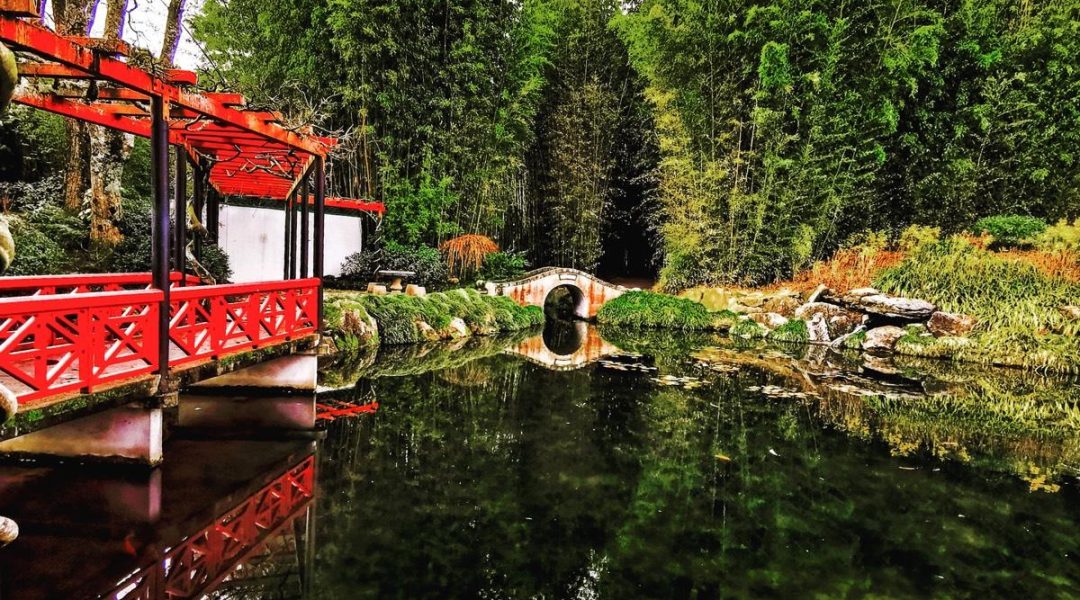
Hamilton Gardens is a collection of 19 Enclosed Gardens that presents garden design as a journey through cultures, ideas and periods of history. Instead of arranging the main experience only by plant type, the Gardens uses walls, paths, buildings, water, sculpture and planting to show how different societies imagined paradise, produced food and turned gardens into art.
This guide is for visitors who want to understand the themed gardens rather than simply photograph them. It explains the collections, suggests routes for different interests and adds context for the Medieval Garden, which opened as the 19th Enclosed Garden on 24 September 2026. Garden information and visitor links were checked against Hamilton Gardens and Hamilton City Council on 8 October 2026.
Hamilton Gardens themed gardens at a glance
| Detail | What to know |
|---|---|
| Main experience | Nineteen Enclosed Gardens exploring cultures, historical periods and ideas about garden design. |
| Core collections | Paradise, Fantasy and Productive collections, plus the newest Medieval Garden. The wider site also includes Cultivar and Landscape collections. |
| Newest garden | The Medieval Garden opened on 24 September 2026 and became the 19th Enclosed Garden. |
| Current Enclosed Garden hours | 10am to 6pm daily except Christmas Day, with last entry at 5:30pm. Check the official site before travelling. |
| Time to allow | Two to three hours for a considered Enclosed Gardens visit, or longer if you add the outer gardens, café, playground or river paths. |
| Best planning tool | The official interactive map, followed by the current ticket, access and tour pages. |
The key distinction is between the ticketed Enclosed Gardens and the wider park. The themed rooms that create the best-known “world tour” sit inside the Enclosed Gardens. Other experiences, including the Rogers Rose Garden, Rhododendron Lawn, woodland walks, playground and lake area, form part of the wider Hamilton Gardens landscape. Use our complete Hamilton Gardens visitor guide for current ticket guidance, transport and general trip planning.
Why is Hamilton Gardens different from a botanical garden?
Hamilton Gardens treats the garden itself as the subject. Plants matter, but they work alongside architecture, proportion, enclosure, symbolism and movement. A path may control what you see next. A wall can separate one worldview from another. Water may represent order, reflection, productivity or status depending on the garden.
The official concept groups spaces by the relationship between people and gardens. The Paradise Collection explores different ideas of an earthly paradise. The Fantasy Collection connects gardens with imagination, art and storytelling. The Productive Collection shows how communities used gardens for food, medicine and daily life. The Cultivar Collection focuses more closely on selected groups of plants, while the Landscape Collection explores larger relationships between designed space and the wider environment.
This structure changes how you should visit. Looking only for the most colourful flower bed misses much of the point. Notice the entrance, the view framed by a doorway, the way a route turns, the materials underfoot and how the space expects you to behave. Quiet contemplation suits one garden; surprise and play suit another.

The Paradise Collection: six views of an ideal world
The Paradise Collection is the clearest introduction to the Gardens’ central idea. Its six gardens show that “paradise” does not have one universal form. Some spaces are symmetrical and controlled. Others are informal, contemplative or designed for outdoor living.
- Chinese Scholars’ Garden: a composed landscape of paths, rocks, water, pavilions and changing viewpoints. It rewards a slow walk because scenes appear and disappear as you move.
- Indian Char Bagh Garden: an enclosed four-part garden shaped by geometry and water channels. Seasonal planting adds colour, but the underlying order is the lasting design lesson.
- Italian Renaissance Garden: a formal space where terraces, statuary, perspective and controlled planting express human order imposed on nature.
- Japanese Garden of Contemplation: a restrained garden that uses carefully placed elements and open space to encourage quiet attention.
- English Flower Garden: a garden composition associated with the Arts and Crafts tradition, where rich seasonal planting works within a carefully designed structure.
- Modernist Garden: a mid-century interpretation of outdoor living, showing how the garden could become an extension of the home.
A useful comparison is the direct route from the Chinese Scholars’ Garden to the Italian Renaissance Garden. Both are highly designed, but they organise movement, scenery and symbolism differently. Follow that with the Modernist Garden and the idea of paradise shifts again, from historical court or scholarly retreat to domestic leisure.

The Fantasy Collection: gardens as stories and ideas
The Fantasy Collection moves away from paradise and asks how gardens can become works of imagination. These seven spaces borrow from literature, artistic movements and historical fashion. They often make the strongest first impression on families and photographers, but the visual surprise is only the entry point.
- Surrealist Garden: oversized garden tools and deliberately strange forms change the visitor’s sense of scale. It is designed to feel dreamlike rather than naturalistic.
- Mansfield Garden: a staged scene based on Katherine Mansfield’s short story The Garden Party. The garden reads like a moment in a narrative rather than a neutral landscape.
- Tudor Garden: an intricate formal garden featuring symbolic beasts and patterns associated with Tudor garden fashion.
- Picturesque Garden: a composition shaped to feel like a romantic landscape picture, with controlled views that appear more spontaneous than they are.
- Concept Garden: an idea-led contemporary garden where visual devices encourage visitors to question what they are seeing.
- Chinoiserie Garden: an interpretation of the European fashion for imagined Chinese-inspired design rather than a Chinese garden. That distinction matters.
- Tropical Garden: dense planting and enclosure create a lush experience that feels separated from the surrounding Waikato setting.
Do not confuse the Chinoiserie Garden with the Chinese Scholars’ Garden. Chinoiserie describes a European decorative tradition shaped by imagined ideas of China. The Scholars’ Garden belongs to a different design lineage and experience. The neighbouring spaces make a useful lesson in how labels and historical context change what a visitor understands.
The Productive Collection: food, medicine and daily life
The Productive Collection is essential if you want to understand gardens as working places. These are not simply decorative spaces. They show relationships between climate, knowledge, food, health, household organisation and cultural practice.
- Te Parapara Garden: Hamilton Gardens identifies this as New Zealand’s only traditional Maaori productive garden. It presents practices and knowledge connected with growing food in pre-European Aotearoa.
- Ancient Egyptian Garden: a temple-garden interpretation that connects planting with ancient religious, social and productive life.
- Kitchen Garden: a productive garden influenced by European estate traditions, where the arrangement of crops is part of a larger system of household provision.
- Herb Garden: an aromatic collection showing plants valued for culinary, medicinal and household uses.
- Sustainable Backyard Garden: a recognisably local domestic setting that explores practical food growing and resource-conscious gardening.
Te Parapara needs more care than a quick “global gardens” label allows. It is located in Kirikiriroa and presents Maaori horticultural knowledge within Aotearoa. Treat it as central to the story of this place, not as one more exotic stop on an international checklist. Read the official interpretation, respect barriers and use the names provided on site.
The Medieval Garden: Hamilton’s 19th Enclosed Garden
Hamilton City Council opened the Medieval Garden to the public on 24 September 2026. The new space is inspired by medieval monastery and apothecary gardens. Its working planting is arranged across four quadrants, with species selected for roles that plants played in medicine, food and household life.
The architecture is part of the experience. Council records a cloistered walkway with 52 archways, a 12-metre bell tower and 10,000 hand-finished tiles. Surfaces were intentionally varied and aged to suggest a place shaped over time rather than a newly completed set. The garden will continue to change as planting matures.
This is also a useful bridge between the Fantasy and Productive ideas. The space has strong theatrical presence, but its core story concerns practical plant knowledge, care and healing. Council says it is the 19th garden in the Enclosed Gardens collection, with work already under way on a future Baroque garden.
Read the official Medieval Garden opening record
Hamilton City Council explains the garden’s design, planting, construction and opening date.
Explore the Medieval Garden story ↗What sits outside the Enclosed Gardens?
The wider site adds two more collection types. The Cultivar Collection includes the Rogers Rose Garden, Hammond Camellia Garden, Rhododendron Lawn and Victorian Flower Garden. Here the focus shifts toward selected plants, display traditions and seasonal performance.
The Landscape Collection includes Bussaco Woodland, Echo Bank Bush, Hamilton East Cemetery and Valley Walk. These places extend the visit into woodland, local history, remnant vegetation and broader designed landscapes. They are especially useful if you have more than a couple of hours or want a quieter walk after the concentrated Enclosed Gardens.

Choose a route by interest, not by checklist
Nineteen rooms can become a blur if you rush through them only to say you saw everything. A themed route creates stronger comparisons and gives you time to notice detail.
| Interest | Suggested sequence |
|---|---|
| Design and architecture | Italian Renaissance, Indian Char Bagh, Chinese Scholars’, Tudor and Medieval gardens. |
| Food and useful plants | Te Parapara, Ancient Egyptian, Kitchen, Herb, Sustainable Backyard and Medieval gardens. |
| Art and storytelling | Mansfield, Surrealist, Concept, Picturesque and Chinoiserie gardens. |
| Quiet spaces | Japanese Garden of Contemplation, Chinese Scholars’ Garden and a later walk through Bussaco Woodland. |
| Strong visual contrasts | Indian Char Bagh, Modernist, Tropical, Surrealist and Medieval gardens. |
These are suggested comparisons, not an official route. Open the current map before entry and ask staff about closures, seasonal work or the shortest accessible connection between your chosen spaces.
How to read each garden like a collector
- Pause at the entrance. Notice what the doorway reveals and what it hides. Enclosure creates the transition between garden worlds.
- Look for the main axis. Formal gardens often organise sightlines, paths and water around strong geometry.
- Watch how the route changes. A straight path communicates something different from a winding sequence of partial views.
- Separate structure from seasonal planting. Walls, water, paving and hedges may carry the main idea even when flowers change.
- Read the interpretation. Cultural and historical meaning should come from the garden’s authoritative information, not from assumptions based on appearance.
- Compare before photographing. Move between two gardens and ask how each treats privacy, order, labour, beauty or food.
This approach makes repeat visits worthwhile. The permanent design remains, but light, foliage, flowers and visitor activity alter the experience. A garden that felt restrained in winter may become visually busy in spring; a shaded route may become the more comfortable choice in summer.
When is the best season for Hamilton Gardens?
There is no single best season for every collection. Tourism New Zealand highlights spring colour in the Indian Char Bagh and Rogers Rose gardens, autumn foliage in the Japanese Garden of Contemplation, the structure of the Italian Renaissance Garden in winter and productive planting at Te Parapara in summer.
That does not guarantee peak conditions on a particular date. Planting schedules, weather and garden work affect what you see. If one display is important to you, check the official site or contact Hamilton Gardens close to your visit. Our Hamilton weather and seasons guide can help with broader trip planning, but the live forecast should decide what you carry on the day.
- Spring: strong for fresh growth and changing floral displays, with conditions that can still be cool or wet.
- Summer: longer daylight and vigorous growth, but bring sun protection and water.
- Autumn: foliage colour becomes part of the experience, especially in gardens designed around contemplative scenery.
- Winter: structure, paving, architecture and evergreen planting become easier to read, while some seasonal displays are quieter.
Use the official map, audio guide or tour
The official map is useful even if you usually prefer wandering. It shows the relationship between the Enclosed Gardens, outer collections, entrances and facilities. Open the current interactive version rather than relying on an old screenshot because routes and the collection continue to develop.
An audio guide suits visitors who want context while moving at their own pace. Hamilton Gardens also offers guided Highlights Tours and other specialist tours when scheduled. Tour availability, departure times, languages and prices can change, so book through the official pages rather than a copied listing.
Plan your collection route
Use the current Hamilton Gardens map to locate all 19 Enclosed Gardens and the wider park collections.
Open the official Gardens map ↗Accessibility, families and respectful visiting
Accessibility differs across the large site, and the best route depends on mobility, current works and which collections you want to reach. Hamilton Gardens publishes a dedicated accessibility page covering parking, wheelchairs, mobility scooters, toilets, service animals and route considerations. Check it before visiting and contact the venue if you need a particular arrangement.
For families, a shorter themed route usually works better than attempting all 19 rooms. Let children compare scale in the Surrealist Garden, search for framed views in the Chinese Scholars’ Garden and identify useful plants in the Productive Collection. The wider site also has a playground, lawns and picnic areas, which can break up a longer visit.
- Stay on public paths and respect barriers, planted beds and collection rules.
- Do not pick flowers, fruit, herbs or other plant material.
- Keep photography considerate and avoid blocking narrow paths or entrances.
- Use cultural names and explanations supplied by Hamilton Gardens.
- Check the official conditions of entry if bringing equipment, planning commercial photography or organising a group.
Practical planning without duplicating the main visitor guide
This article explains what the collection means. For admission, resident passes, current opening times, parking, food, dogs and general visitor logistics, use the main Hamilton Gardens guide for 2026 and confirm all changeable details on the official website.
Hamilton Gardens is at Hungerford Crescent, off Cobham Drive in Hamilton, New Zealand. Public transport routes and timetables can change, so check the Hamilton buses guide and BUSIT journey planner close to travel. Drivers should follow current signs rather than assuming an older parking map remains correct.
If the Gardens is one part of a wider city day, connect it with our things to do in Hamilton, featured Hamilton attractions and Hamilton maps and visitor information. These pages help build a route without forcing unrelated stops into this collection guide.
Frequently asked questions about Hamilton Gardens collections
How many themed gardens are at Hamilton Gardens?
Hamilton Gardens currently has 19 Enclosed Gardens. The Medieval Garden became the 19th when it opened on 24 September 2026. The wider site also includes cultivar, landscape, recreation and visitor areas outside the Enclosed Gardens.
What are the main Hamilton Gardens collections?
Hamilton Gardens groups its experiences into Paradise, Fantasy, Productive, Cultivar and Landscape collections. The first three contain the best-known enclosed themed rooms, while the Cultivar and Landscape collections extend into the wider park.
What is the newest themed garden?
The Medieval Garden is the newest Enclosed Garden. It opened on 24 September 2026 and is inspired by medieval monastery and apothecary gardens, including a cloistered walkway and productive medicinal planting.
Is Te Parapara part of Hamilton Gardens?
Yes. Te Parapara is part of the Productive Collection. Hamilton Gardens identifies it as New Zealand’s only traditional Maaori productive garden, presenting horticultural knowledge and practices connected with pre-European Aotearoa.
Are the Chinoiserie and Chinese Scholars’ gardens the same?
No. The Chinese Scholars’ Garden belongs to a Chinese garden tradition. The Chinoiserie Garden explores a European decorative fashion shaped by imagined Chinese influences. They represent different histories and ideas.
How long should I allow for the themed gardens?
Allow roughly two to three hours for a considered visit to the Enclosed Gardens. A focused route can be shorter, while adding the outer gardens, café, playground or Waikato River paths can turn the visit into a half day.
Do I need a ticket for the Enclosed Gardens?
Admission rules apply to the Enclosed Gardens. Hamilton ratepayers can use a qualifying MyGardens Resident Pass, and children under 16 are free under the current rules. Check the official ticket page for current prices, eligibility and conditions.
Where can I find the current Hamilton Gardens map?
Use the official interactive map on the Hamilton Gardens website. It is safer than an old screenshot because the collection, routes and visitor facilities can change.
Official sources and further reading
- Hamilton Gardens garden directory for current garden descriptions and collection links.
- Hamilton Gardens concept for the five collection themes.
- Official interactive map for routes and locations.
- Current ticket information for admission and pass conditions.
- Official accessibility information for mobility and access planning.
- Hamilton City Council’s Medieval Garden opening story for the newest garden’s verified date and construction detail.
Hamilton Gardens continues to develop, so this guide is a starting point rather than a permanent substitute for the official map and visitor information. Check current details before travelling, then give yourself enough time to move slowly. The collection makes more sense when you compare ideas, not when you race through rooms.